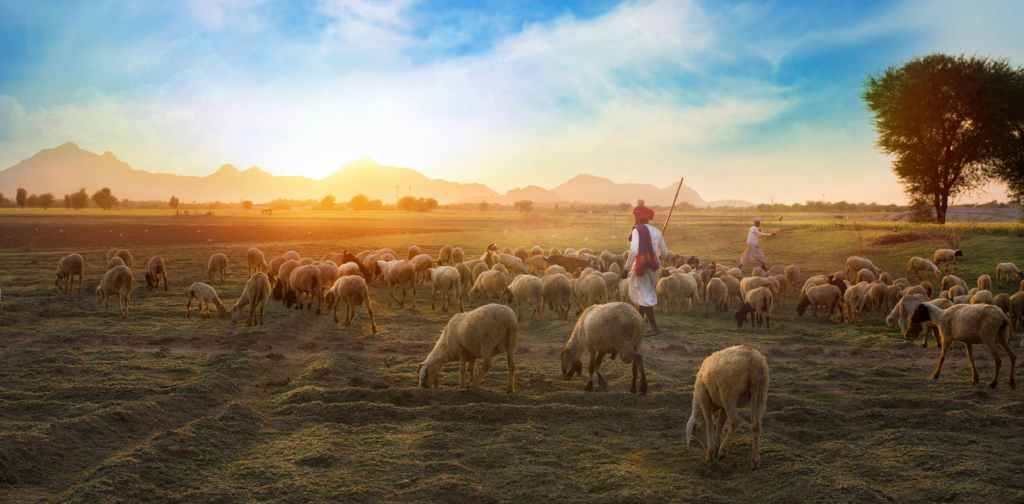
Shepherd (noun): a person who tends sheep.
If you grew up in church or spent any time around Christians, chances are you’ve heard Psalm 23 more times than you can count. By age 10, many church kids (myself included) could recite it in their sleep. But here’s the real question: how many of us have actually meditated on it? Internalized it?
Most Bible translations begin this beloved passage with, “The Lord is my shepherd.” Even the versions that don’t start with those exact words still echo the same truth—God is our Shepherd. And the author? David. A former shepherd himself turned anointed king (see 1 Samuel 16:11). If anyone had the credentials to talk about sheep and shepherds, it was him. David knew firsthand what it meant to guide, protect, feed, and even fight off danger for his sheep (1 Samuel 17:34–37). His flock trusted him. And in Psalm 23, David flips the script—he becomes the sheep, and God is the Shepherd. This sheep-shepherd relationship is a foreshadow of what our relationship with Christ should be, one of total dependence on Him.
“I am the good shepherd; I know my own sheep, and they know me, just as my Father knows me and I know the Father. So, I sacrifice my life for the sheep.” ~ John 10:14-15 (NLT). Jesus calls Himself the good shepherd, one who sacrifices His life for His sheep and who is known by them. If our Shepherd is willing to sacrifice His life for us, wouldn’t He also make sure we’re cared for, provided for and protected? I urge you to read psalm 23, but this time with more intentionality, focusing on the Lord and His character towards His sheep and how do the sheep respond to this commitment of protection and provision by the Shepherd?
Lastly, if Jesus presents Himself as the good shepherd, it implies that there are bad shepherds. So, next month, we will explore differences between good and bad shepherds and how they affect our Christian lives today. Until then, let’s keep growing 2gether. Grace and peace 🙂
 GROWING 2GETHER
Leave a Reply